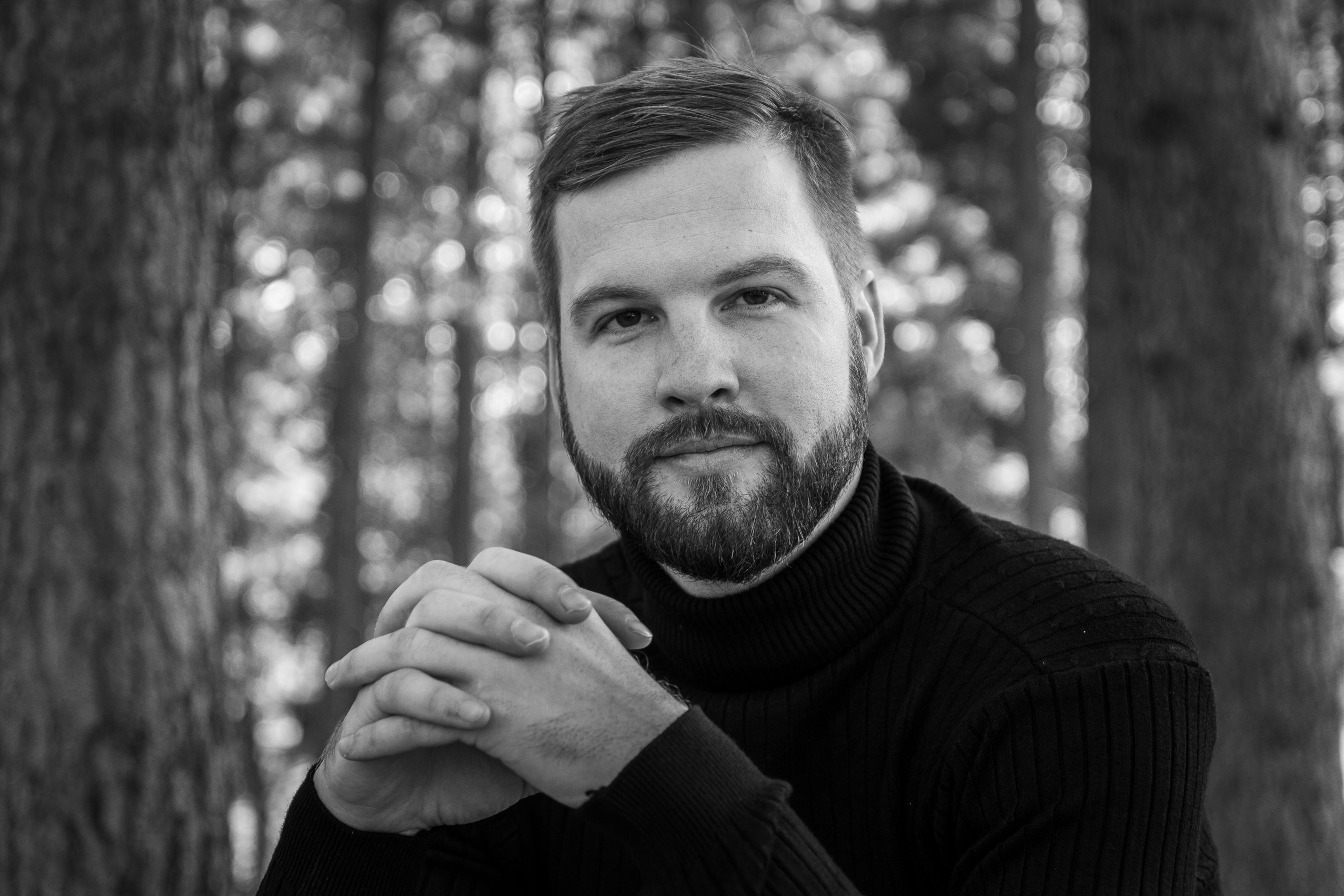
Matthew Simpson, LMHC · Washington State · Telehealth

High‑functioning.
Exhausted.
Stuck in patterns you can't logic your way out of.

IFS-informed therapy for neurodivergent adults — ADHD, AuDHD, autistic traits — who are externally competent but privately running on empty and stuck in cycles of burnout, shame, anxiety, and procrastination. I work at the intersection of IFS, neurodiversity-affirming practice, and men's work.

  • LMHC (WA)
  • Certified NMMNG Therapist
  • ND Clients Since 2018
  • Aetna & Cigna In-Network
  • Free 20-Min Consultation

You are not a problem to be optimized.

You look fine on the outside.


The people I work with are usually doing well by most measures—productive, competent, often high-achieving. What they can't figure out is why certain things stay broken: the same stuck points, the same patterns, the same conversations they've been having with themselves for years.

Most of my clients are high-masking neurodivergent—ADHD, AuDHD, autistic traits. That matters because the standard advice hasn't worked for them. Not because they haven't tried. Because it wasn't built for how their brain actually operates. The same nervous system behind the stuck points is also behind the pattern recognition, the hyperfocus that produces in four hours what takes others a week, and the creative connections that don't follow anyone else's logic — when the conditions are right.

A lot of my clients are men dealing with Nice Guy Syndrome — No More Mr. Nice Guy patterns: conflict avoidance, covert contracts, resentment, approval-seeking, and difficulty asking directly for what they want.

Many work in tech — engineers, PMs, founders, senior ICs. High-output environments that reward masking and rarely create space for what's happening underneath.

If any of this lands, you're in the right place.

See How It Works
Common Concerns

What brings people here

Nice Guy Syndrome

No More Mr. Nice Guy (NMMNG) is Robert Glover's framework for men who've built their identity on being agreeable — and can't figure out why it keeps costing them. Patterns of passivity, hiding emotional truths, conflict avoidance, covert contracts are usually protective strategies from childhood that outlasted their usefulness. Recovery isn't about becoming less kind — it's about replacing approval-seeking with the self-respect that comes from practicing honesty, authenticity, and boundaries in relationships.

Burnout

Chronic overwhelm from high-masking is structurally different from working too hard. It's what happens when the translation layer — the constant work of performing neurotypical competence — runs out of resources. Part of the work is building a life that doesn't require constant translation.

Relationship Problems

The same protective strategies that show up at work show up in close relationships — emotional distance, passive communication, a low-grade resentment that builds without ever being named. The patterns aren't random. They're the same ones, in different rooms.

Addiction Issues

Substance use problems, scrolling, overworking, pornography — these aren't just habits you want to break. They're strategies parts of you use to manage emotional intensity. Addictive behaviors are about doing inner work as much as behavioral change.

Emotional Literacy & Boundaries

Building the capacity to name what you feel, ask for what you need, and hold boundaries without guilt or over-explanation.

Who this isn't for


This isn't a good fit if you're looking for someone to tell you what to do, give you a list of coping skills, or confirm that the problem is everyone else. It's also not the right fit if you want a therapist who will stay neutral on everything. I have a point of view. I'll share it.

If you want someone who will sit with the uncomfortable parts — the ones you've been managing around for years — and actually help you change the pattern, not just understand it, then keep reading.

A note on scope

There are some things I don't treat, and I'd rather tell you up front than waste your time.

I don't treat active psychotic disorders or eating disorders as primary presenting issues — if those come up, I'll refer you to someone with the right specialty or ask that we add an expert to your team. At this time I'm not taking new clients with active suicidal ideation or recurrent self-harm. I don't provide court-mandated treatment, legal assessments, or court testimony. I don't write Emotional Support Animal letters.

If you're not sure whether your situation fits, reach out — that's what the consultation call is for.

My Approach

IFS-informed. Neurodivergent-affirming.


IFS and neurodivergent-affirming care share a common assumption: your patterns developed for real reasons, and the goal is understanding and reducing the conditions that maintain them — not forcing change through willpower or shame. Executive function scaffolding and relational work sit on top of that foundation. Tools in service of Self-led agency, not corrections imposed from outside.

Most of the people I work with can describe their patterns with real precision. They know what they do, they know why it's a problem, and they've tried to change it. The issue isn't insight. It's that insight alone doesn't move the parts underneath.

IFS handles the inner work—shame, self-criticism, the protective strategies that developed for good reasons and outlasted their usefulness. Executive function scaffolding handles the outer work: what actually changes between sessions, and what structure makes it hold.

IFS & Parts Work

Get underneath the patterns instead of just managing them. Procrastination, people-pleasing, shutdown — these aren't character flaws. They're protective strategies that made sense once. We work with them, not against them. The goal is unblending: enough space from these parts that you can actually choose your response instead of being run by it.

Executive Function Scaffolding

Build the conditions that actually engage your nervous system — external structure designed around interest, novelty, challenge, and urgency, not importance and deadlines. This isn't about forcing neurotypical performance. It's about building the scaffolding that makes Self-led follow-through possible.

Men's Work & NMMNG Integration

For neurodivergent men, Nice Guy patterns often have a specific origin: decades of masking, chronic approval-seeking as a survival strategy, and the particular exhaustion of performing competence while suppressing authentic need. IFS reaches the parts actually running those patterns — the ones behavioral advice alone can't touch.

ND Adults Since

2018

WA State License

LMHC #LH61238290

Clinical Approach

IFS-Informed

Certification

NMMNG Therapist

Practice Format

Telehealth · WA Only

Matthew Monroe Simpson, LMHC
About Matt

I'm not approaching this from the outside.


I'm a Licensed Mental Health Counselor in Washington State. I've been working with neurodivergent adults since 2018, have ADHD and autistic traits myself, and am currently finishing my IFS L1 Training. I'm one of a small number of therapists certified directly through Dr. Robert Glover's NMMNG training program.

LMHC · WA State Licensed 2020 ND Clients Since 2018 Certified NMMNG Therapist IFS-Informed
More About Matt
Also Available · Global

Need executive function support, not therapy?

Matt also runs High Signal Coaching — a global coaching practice for neurodivergent founders, tech professionals, and executives. No geographic restriction, no clinical relationship, focused entirely on systems and execution.

Visit High Signal Coaching →
Common Questions

What people ask before reaching out

Internal Family Systems (IFS) works with the different "parts" of you—the part that shuts down, procrastinates, or people-pleases—with curiosity instead of self-criticism. For adults with ADHD or neurodivergent traits, it addresses the shame underneath the patterns, not just the patterns themselves. Behavioral change without that inner work rarely sticks.

Yes — this is a telehealth-only practice. Sessions are conducted via Zoom, and you must be physically located in Washington State at the time of each session. A Zoom link is sent automatically when you book through Alma.

Yes. I'm credentialed in-network with Aetna and Cigna. For clients with other insurers, superbills are automatically sent via Alma for out-of-network reimbursement. HSA and FSA cards are accepted in most cases.

Sessions go beyond tips and tools. The work starts from the inside: IFS parts work to address the shame, self-criticism, and protective strategies underneath the patterns. Executive function scaffolding provides the outer layer — structure built around how your nervous system actually activates, not how it should. The goal is change that actually holds, because the inner system is moving with it rather than against it.

No. Many of my clients are self-identified or late-identified. A formal diagnosis can be useful for some purposes, but it's not a prerequisite for therapy. If the patterns resonate — the executive function struggles, the masking, the burnout cycle — that's enough to start.

Therapy goes deeper. Coaching works at the level of strategy and behavior — what you do differently between sessions. Therapy works at the level of the parts underneath: the shame, the protective strategies, the patterns that don't respond to better systems alone. I also run High Signal Coaching for clients who need executive function support without the clinical frame. Some people do both.

Book a free 20-minute pre-consultation through Alma. You'll pick a time, get an immediate confirmation with a Zoom link, and have a real conversation about what's going on and whether this approach is the right fit. No paperwork, no commitment.

Book via Alma

You already know something needs to change.

No intake forms. No commitment.
Just a 20-minute conversation to see if this is the right fit for your needs.