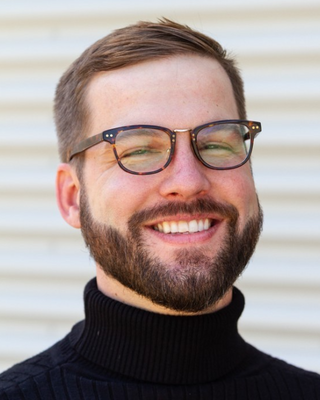
Matthew Simpson, LMHC
Licensed Mental Health Counselor · Washington State · IFS Therapist · Neurodivergent-Affirming
How I work—and who I work best with
After years of this work — and having ADHD and autistic traits myself — I've found a real sense of belonging in what Steve Silberman, in NeuroTribes, called "a convivial society of loners." The people I tend to connect with often identify as outsiders to the mainstream, the kind who do their deepest work alone but are most at home around others on the same frequency. I approach this work as an equal — a fellow traveler, someone inside the community.
My clinical approach is grounded in IFS — Internal Family Systems, Level 1 trained. What that means in practice: I'm not interested in behavioral change that doesn't address why the behavior is happening. IFS gets at the parts underneath—the shame, the avoidance, the protective strategies that developed for good reasons and outlasted their usefulness. Once those parts have been heard and shifted, external scaffolding—habits, routines, follow-through, boundaries—actually has somewhere to land. That is often the missing link for neurodivergent adults who have already tried dozens of systems that never quite fit.
I've completed IFS Level 1 Training through the IFS Institute, deepening clinical work I've been doing with clients for years. I'm also a certified No More Mr. Nice Guy therapist—one of a small number who trained directly with Dr. Robert Glover, not just familiar with the book. A lot of my clients are men who recognize themselves in No More Mr. Nice Guy patterns: conflict avoidance, covert contracts, resentment, approval-seeking, and difficulty asking for what they actually want.
Outside of clinical work, I've spent years as a music producer and audio engineer. My love and dedication to the craft of music production shapes how I think about systems: everything is signal and noise, and the job is usually always about reduction — find the essential thing through experimentation and play, then cut away everything else that doesn't serve. That framework informs how I approach complex systems.
I'm happiest traveling, out in nature, or spending time with my partner and our young son. I love being around creative people and being in the creative process, in whatever form that takes. Spanish runs through my daily life as much as English. I've spent close to half my adult life in Latin America or Spain, and our son is growing up bilingual and bicultural. I work with clients in both languages.
The frameworks I draw on
Every client is different. These are the lenses I use most consistently— chosen because they hold up with neurodivergent brains and complex relational patterns.
IFS — Internal Family Systems
IFS treats the mind as a system of "parts"—each one trying to protect you in some way, even when the behavior is no longer working. By approaching these parts with curiosity instead of judgment, we can access the calm, clear-headed Self-energy that leads to lasting change.
This is especially effective for patterns that don't respond to insight or willpower alone—procrastination, people-pleasing, avoidance, compulsive coping.
Executive Function Scaffolding
Neurodivergent brains often have executive function profiles that standard productivity advice ignores. We build systems for routines, habits, follow-through, and boundaries that are designed around how your brain actually operates—not how it "should."
This isn't about trying harder. It's about building structures that work with your nervous system.
Neurodivergent-Affirming Therapy
ADHD, AuDHD, and autistic neurologies are architectures — not deviations from a correct standard. There isn't one. The clinical work here doesn't try to bring the system into conformity with a norm. It works with the actual architecture: what the nervous system is, how it organizes, what it responds to. That's a different kind of therapy than most neurodivergent adults have encountered.
Relational Accountability & Repair
Approval-seeking, conflict avoidance, covert contracts, trouble saying what you actually want — real patterns, but they don't all come from the same place, and the work depends on which it is. Understanding why a pattern formed isn't the same as repairing what it cost, so accountability and repair stay central, not just insight. The aim isn't a more pleasing version of you. It's steadier ground.
If we're a fit
If we're a fit, you can expect attuned listening, development of clear therapy goals, honest feedback, and weekly experiments that help translate insight into change that actually holds.
We start with a free 20-minute pre-consultation to clarify what's happening, what you want, and whether my approach matches what you're looking for. There's no pressure—it's just a conversation.
Book a Free 20-Minute ConsultationPractical Details
- Telehealth only · Washington State residents
- 60-minute weekly sessions
- Free 20-minute pre-consultation
- $125 per session
- Sliding scale available
- Private pay
- Out-of-network superbills available — provided after each session
Credentials
- Matthew Simpson, LMHC
- Washington State License #LH61238290
- NPI #1609425420
- Licensed since 2020
Let's see if we're a good fit.
No intake forms. No commitment.
Just an honest 20-minute conversation about what's going on.